Immersive sounds tapping into worlds beyond
|
||
|
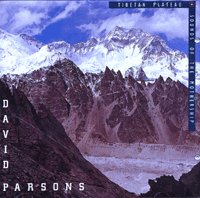
On learning of David Parsons’s death, Echoes host John Diliberto recalled the debut album “Sounds of the Mothership” (1980). “Back then, you talked about him in the same breath as Steve Roach, Robert Rich, and Kevin Braheny. David Parsons explained his philosophy in a 1998 interview with Bert Strolenberg for Wind and Wire magazine: “My music is what naturally flows from me, good or bad, In recent years, many of his albums were issued on Gterma (a Swedish record “I was building up a library of releases from labels like Fortuna, Waveform, Spotted Peccary, Hypnos, and Celestial Harmonies. I was also doing a lot of travelling in Asia
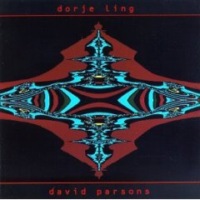
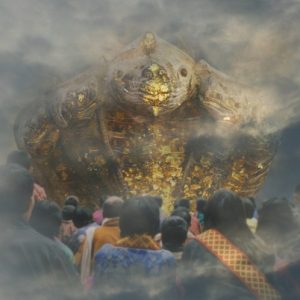
Rehn says the track “Manasarovar” from the album Rehn still remembers the day he phoned his musical hero to see about releasing David’s music on the Gterma label. “It was like being back in high school and working up the courage to ring up a girl you had a crush on all over again, except there was “Anyway, I quickly discovered that he was an incredibly chill and laid-back guy, and The relationship with Gterma was a success, with the label releasing three more
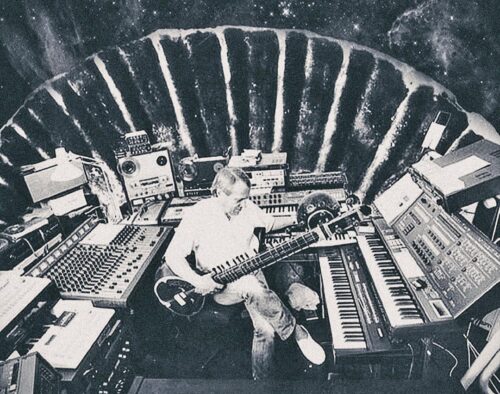
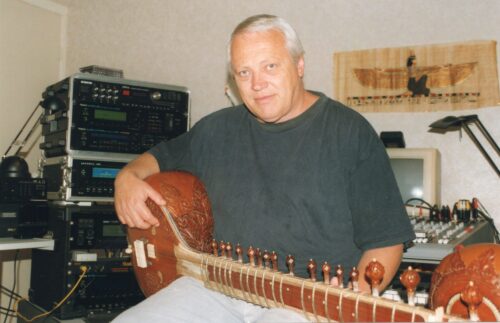
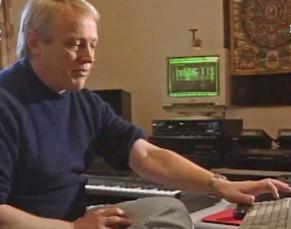
It had been a remarkable journey for David Parsons, born in New Zealand “This eventually filled out into a fascination for all non-Western music traditions. It took me three years to get a sitar, and then I taught myself for seven years. I eventually went to Varanasi, India, to study formally”. David found the classes very demanding, having to unlearn a lot of bad habits – he’d taught himself – and being told to keep on doing his exercises even though his fingers were bleeding. While he became proficient at the sitar, he often expressed dissatisfaction with the quality of his playing and used it mainly for his personal meditation. Consequently, the sitar rarely featured in his recorded music, though it can be heard on the album “Sounds Of The Mothership”. He also played sitar on some soundtracks, such as the 1993 documentary about Indian wildlife, “The Monkeys of Hanuman”. By the end of the 1970s, David had purchased a Roland SH-7 synthesizer and a Revox tape recorder and, as a hobby, began creating his first sonic landscapes. In a New Zealand television interview in 1991, he explained his approach to making music; “It was just basically what I felt like doing, I didn’t have a label for it.. and because there were no rules for what I wanted to do, I just collected sounds from everywhere and anywhere and tried to mix that in with electronic music and acoustic Indian stringed instruments, etcetera, to create music that was the total sum of my musical experience”.
Through those early experiments, he created the recordings that would eventually be released on Celestial Harmonies as his first album, “Sounds Of The Mothership”. The record caught the attention of many listeners across the world, including a young Steve Roach, who had just signed up to the same record label. “I still remember holding the cassette (as that was the medium at that point, before CDs), and instantly when I heard it, I just felt very familiar with it”, he told Marius-Christian Burcea in a tribute podcast on Burcea’s webpage Journeys To The Infinite.
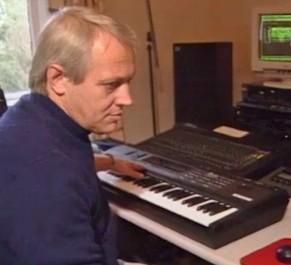
David Parson told Wind and Wire he was very surprised at the ongoing positive reception his first album received. “I don’t know what it was that people liked about “Mothership”, by today’s standards it was very crudely put together”. “Today I am still getting royalties from that album, and it’s getting airplay, and I don’t know why”. Despite going on to work extensively for soundtracks and commercials for both film and television, David didn’t actually conventionally play keyboards, but instead would programme the sounds so that they evolved in a musical way while he held down the keys. Consequently, he was always searching for the right synthesizer to match his approach to music-making. Between 1984 and 1994, he swapped between an Oberheim XPander, a PPG Wave 2.2, a Sequential Circuits Prophet VS, a Roland D50, a Yamaha SY77, eventually settling on a Kurzweil K2000 (later upgraded to a K2500). And that’s not counting the additional rack-mount versions and many other samplers and synthesizers along the way. Another of David’s “day jobs” was to spend time travelling, recording music from remote parts of the globe for the Celestial Harmonies record label. Before setting off on one of his long overseas trips, he left the master tapes of his latest finished album with his friend and Celestial Harmonies label-mate Jon Mark.
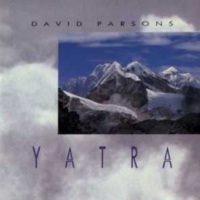
Jon was so excited with what he had heard that he supervised the music’s release as a double album On his overseas travels, David was impressed with the musicianship of world artists such as Armenian duduk player Gevorg Dabagian. This inspired him to put together a sampling of what it might sound like to have the musicians flown to a western recording studio and create an album. The concept wasn’t a revolutionary one, as Peter Gabriel’s Real World label was doing a very similar thing. But David was to be disappointed, as Celestial Harmonies instead simply chose to release his demo version – which became “Ngaio Gamelan” (1999) -. In his 1991 television interview, David explained how the growing interest in New Age composers wasn’t actually influencing his musical output, preferring to simply create sonic landscapes for his own tastes. “I’m always looking for the lost chord, if you like.. I’m always trying to push forward and find sounds that have therapeutic value or spiritually uplifting value, if you like. So I’ll continue to do that even if this current [worldwide] love-affair with New Age music dies – it doesn’t worry me particularly at all, I’m just going to go on with what I’m doing”. Tibetan Buddhism had a strong resonance for David, and his later years were spent living in New Zealand’s Stokes Valley – a pleasant wooded glen that features the Bodhinyanarama Buddhist monastic temple. One of the main themes of Buddhism is recognising “the impermanence of life”, and it’s likely that David, as he was weakened by old age and pulmonary fibrosis, would have faced his approaching death with strength and confidence, plus the firm knowledge that his unique musical creations had touched and transported thousands of listeners across the globe. As David’s life came full circle, he left behind his wife Kay, whose photographs and artist portraits featured on several album covers, plus three children and two grandchildren. David’s listeners are also left with a catalogue of more than twenty albums of his inspirational music, created over the span of his adult life. In 2022, Steve had been discussing a collaborative project with David before he died. “In the last years of his life, we were in close touch through email and electronically”, he told Journeys To The Infinite. “We were close to collaborating. We were working that out, and he actually sent me some fantastic material that I was ready to get started on, and then he left the planet”. Since then, Steve has received additional audio files from David’s family, which might one day result in a unique, posthumous collaboration between Steve and one of his early musical heroes. Additionally, Johan Rehn of Gterma says we might also eventually get to hear other unreleased music created by David Parsons, “All I can say is that there is currently nothing in the immediate pipeline, but there were broader concepts and outlines for further work which were halted last winter”. This article is the outcome of a collaboration of New Zealand composer Rudy Adrian, Marius-Christian Burcea, host of the podcast website “Journeys To The Infinite”, and me. |
||



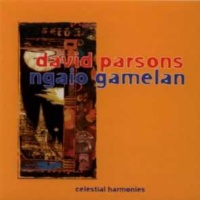 (“Gamelan” being the Javanese word for music ensemble and “Ngaio” the suburb where David lived at the time, and had put the music together.)